
GEO Services: Get Recommended by AI Chatbots
Generative engine optimization (GEO) is how you get your brand mentioned, cited and recommended when people ask ChatGPT, Gemini, Claude, Perplexity, Copilot or Grok for advice. My GEO services strengthen the signals these models rely on: clear entity information, citable content and trusted mentions across the web.
ChatGPT ✦ Gemini ✦ Claude ✦ Perplexity ✦ Copilot ✦ Grok ✦ DeepSeek
The Shift
Your Next Customer May Never See a Search Results Page
More buyers now ask a chatbot “who’s the best option for…” and act on the shortlist it gives them. If the model doesn’t know your brand, or doesn’t trust what it knows, you simply aren’t on that list.
Chatbots build their answers from what’s on the web: your own pages, reviews, directories, articles and discussions that mention you. GEO makes sure that picture is accurate, consistent and strong enough to be repeated.
I don’t sell tricks to “hack” AI. The work is about being the clearest, best-documented and most-cited option in your niche, which also helps your normal Google rankings.
Sound Familiar?
ChatGPT Recommends Your Competitors but Never You.
AI Tools Describe Your Business Incorrectly.
Perplexity Cites Other Sites for Topics You Know Best.
Your Brand Has Little Presence Outside Your Own Website.
You’re Not Sure How AI Tools See Your Business at All.
What’s Included
What My GEO Services Include
The building blocks that make AI models confident enough to mention you.
AI Visibility Check
I test how major chatbots describe and recommend you for your key queries, so we start from real evidence.
Entity & Brand Clarity
Consistent name, description, services and author details across your site, schema and profiles, so models connect the dots.
Citable Content
Original data, clear definitions, comparisons and expert explanations that AI tools prefer to quote and link.
Topical Authority
Content clusters that cover your subject in depth, linked so engines see you as a reliable source on it.
Mentions & Digital PR
Earning genuine mentions on trusted sites, directories and publications that AI models read.
AI Crawler Access
Robots.txt, llms.txt and technical settings reviewed so AI crawlers can reach the content you want them to see.
How AI Decides
Three Things AI Needs Before It Recommends You
If any one of these breaks, chatbots either can’t find you, don’t understand you or don’t trust you enough to mention you.
| Layer | What AI is really checking | Common blockers | What I fix |
|---|---|---|---|
| 1. Access | Can its crawlers reach and read your pages? | AI bots blocked in robots.txt, firewall or Cloudflare settings that block AI crawlers, content that only loads with JavaScript | Allow the right bots (such as GPTBot, OAI-SearchBot, ClaudeBot and PerplexityBot), keep key content in plain HTML, check every important page is indexable |
| 2. Clarity | Does it understand who you are and what you do? | Different names, services or details across your site and profiles, vague service pages, no About or author information | A single brand fact sheet, consistent profiles, clear service pages, accurate Organization and Person schema |
| 3. Corroboration | Do other sources confirm you’re good at it? | Few reviews, no mentions in lists, directories, forums or articles your industry reads | Review requests, genuine mentions, citations and content worth referencing. No paid link schemes |
The AI Visibility Baseline
Before changing anything, I ask the questions your buyers ask in ChatGPT, Gemini, Perplexity and Google’s AI results, and record the answers. For each question I note:
- Are you named? Mentioned at all, or missing from the shortlist.
- Are you cited? Is there a link to your site as a source?
- Is it accurate? Does the AI describe your services, location and prices correctly?
- Who wins instead? Which competitors and which sources the AI relies on.
I keep brand questions (“who is Smith Dental?”) separate from buying questions (“best dentist near me”). Many businesses are known but never recommended, and the two need different fixes. Later I re-test the same questions, so you can see what changed instead of guessing.
Real Data
When AI Tools Start Mentioning a Site
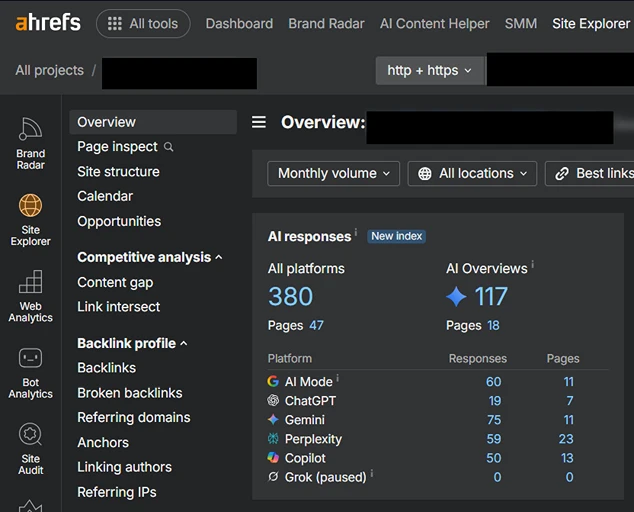
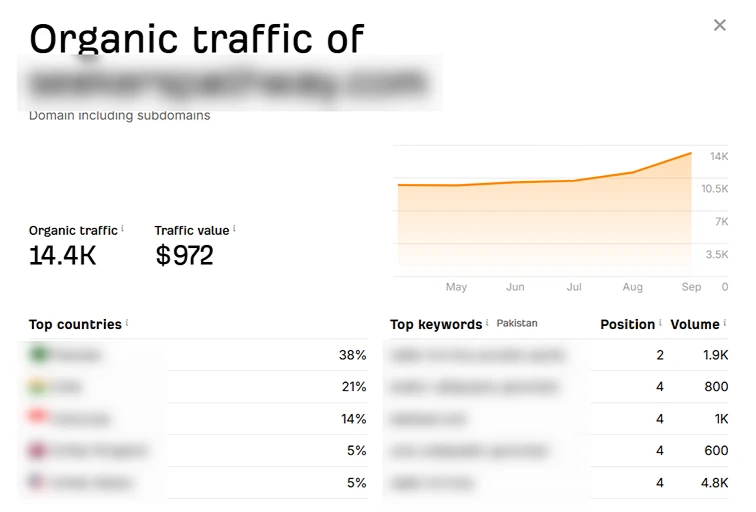
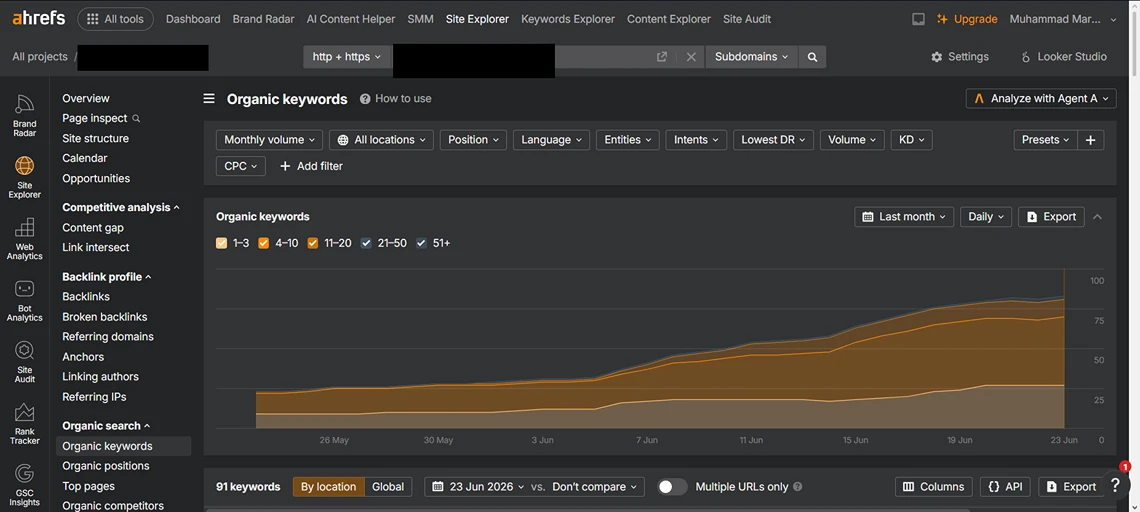
A real Brand Radar report of a site referenced across ChatGPT, Gemini, Perplexity, Copilot and Google’s AI features, alongside the organic traffic and keyword growth tracked for it.
How It Works
How a GEO Project Runs
We measure first, fix the gaps, then grow your presence.
01
Baseline Test
I run your priority questions through major AI tools and record who gets mentioned and cited.
02
Fix Your Entity
Your site, schema and profiles are aligned so every source tells the same, accurate story.
03
Create Citable Assets
We publish or improve the pages most likely to be quoted for your topics.
04
Grow & Re-Test
Mentions and authority are built over time, and visibility is re-tested regularly.
Fit Check
Is This the Right Fit for You?
A Good Fit If…
You Sell Something People Research by Asking for Recommendations.
You Have Real Expertise, Data or Experience to Share.
You Want Long-Term Brand Visibility, Not a One-Off Trick.
You’re Willing to Build a Presence Beyond Your Own Website.
Probably Not a Fit If…
You Want Guaranteed Mentions in ChatGPT (Nobody Controls Model Outputs).
You’d Like Fake Reviews or Spammy Mentions to Game AI Tools.
Your Website Isn’t Indexable yet (Technical SEO Comes First).
You Need Instant Results This Month.
Related Services
FAQs
GEO Services: Common Questions
What people ask me about getting found in AI chatbots.
What Is Generative Engine Optimization (GEO)?
Generative engine optimization is the practice of improving how AI chatbots like ChatGPT, Gemini, Claude and Perplexity understand, mention and cite your brand. It combines entity clarity, citable content, topical authority and trusted mentions across the web.
Can You Get My Business Recommended by ChatGPT?
I can make your business much easier to recommend, but no one can force a model to mention you. GEO improves the information these tools learn from and retrieve, which raises your chances of being included.
How Do You Measure GEO Results?
I test a fixed set of questions in major AI tools before and during the work, and record mentions, citations and how accurately you’re described. I also watch referral traffic from AI tools in Analytics where it’s visible.
Is GEO Different From SEO?
Yes, but they overlap. SEO focuses on ranking pages in search results. GEO focuses on being part of the answer an AI writes. Strong SEO, clear content and real authority help both. I explain the difference in GEO vs SEO.
Should I Block AI Crawlers?
It depends on your business. Blocking them protects content but can reduce your visibility in AI answers. I’ll help you decide which crawlers to allow based on your goals.
How Long Does GEO Take?
Fixing entity information and key pages can help within weeks for tools that search the live web, like Perplexity. Changes in how models describe you from training data usually take longer, often months.
Do You Also Do AEO?
Yes. AEO focuses on direct answers in Google and voice search, and it pairs naturally with GEO. See my AEO services.
What Do You Need From Me to Start?
Your website URL, the services you most want to be known for and the questions your customers usually ask. Access to Search Console and Analytics helps too.

Curious How AI Tools Describe Your Business?
Share your URL and main service. I’ll reply personally with what I find.