
SEO Case Studies and Real Results
See what happened when real websites got the right SEO, AEO and technical work. Each case study shows the starting point, what I did and the results, with screenshots from real data.
Real screenshots ✦ Clear time frames ✦ No made-up numbers
Real Results
SEO Results Screenshots
Screenshots of real rankings, traffic growth and campaigns from projects I’ve worked on.


Case Study 01
Self-Storage: Page-One Local Results in Four US Towns
Self-storage, USA (Hubert NC, Harrisonburg VA, High Point NC and Elyria OH) · nearbystoragerentals.com
The Challenge
Local storage facilities compete with national chains such as CubeSmart and Extra Space Storage, and with big directories such as Yelp, for searches like “storage units + town”. They need to show up in the map pack and in the organic results below it.
What I Did
- Built nearbystoragerentals.com on WordPress. It now has 455 posts and 28 pages.
- Created a location page for each facility, with unit types, climate-controlled and drive-up options and access details.
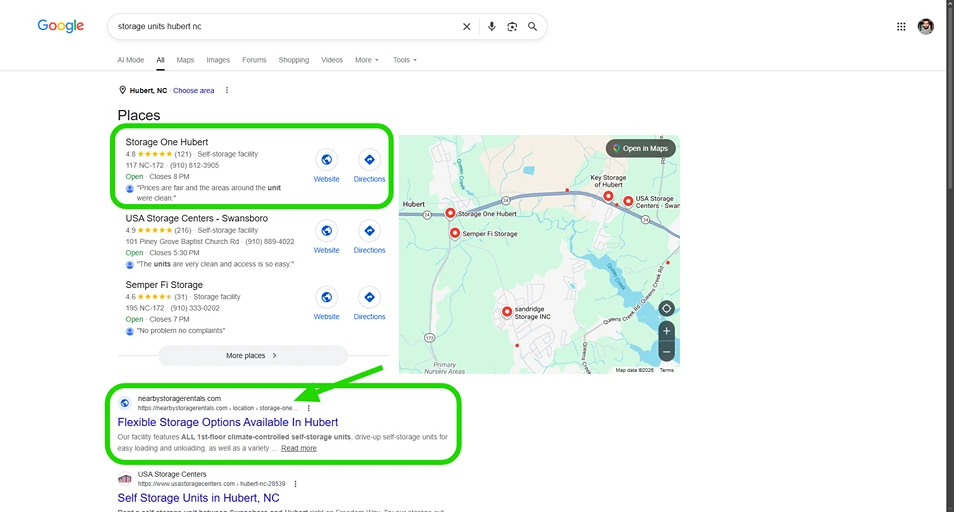
- Wrote each page title around the town and the service, for example “Flexible Storage Options Available In Hubert”.
- Added structured data (Organization, WebSite and FAQ schema) so Google can read the business details.
The Results
- “storage units hubert nc”: Storage One Hubert is first in the map pack, and its nearbystoragerentals.com page is the first organic result.
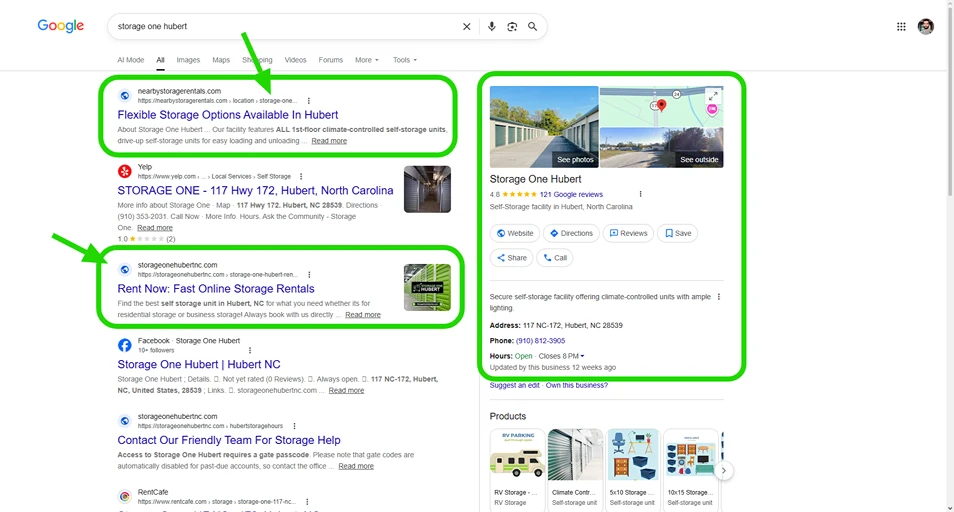
- “storage one hubert”: the nearbystoragerentals.com page ranks first, above Yelp, and the facility’s own website is also on page one.
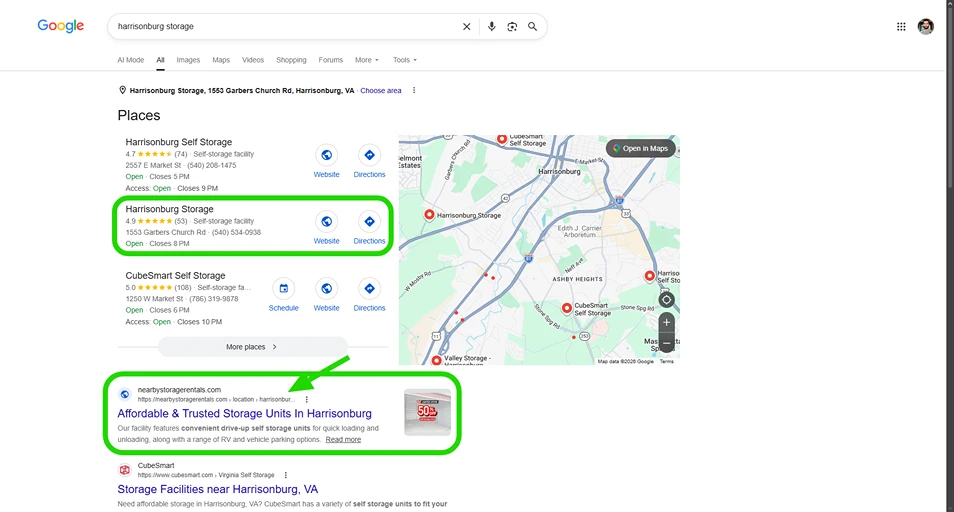
- “harrisonburg storage”: Harrisonburg Storage is second in the map pack, and its location page is the first organic result.
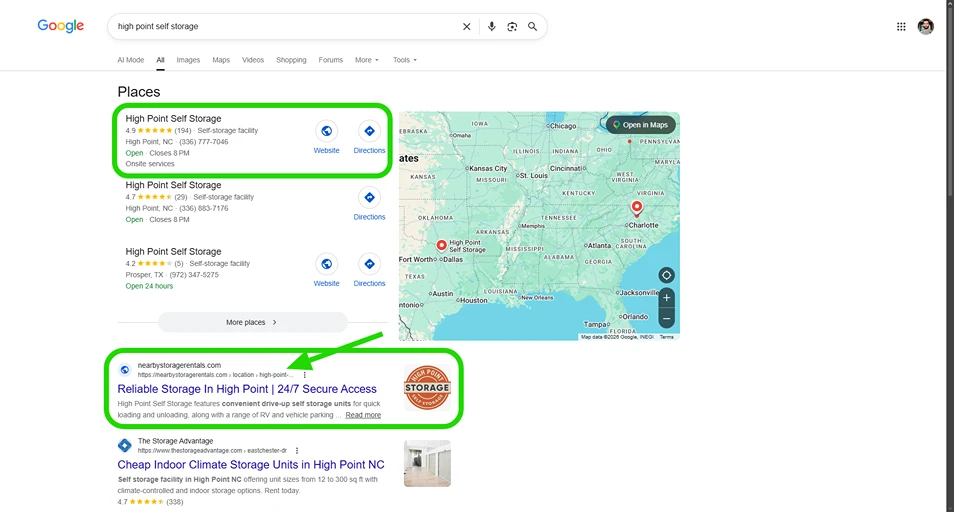
- “high point self storage”: High Point Self Storage is first in the map pack, and its location page is the first organic result.
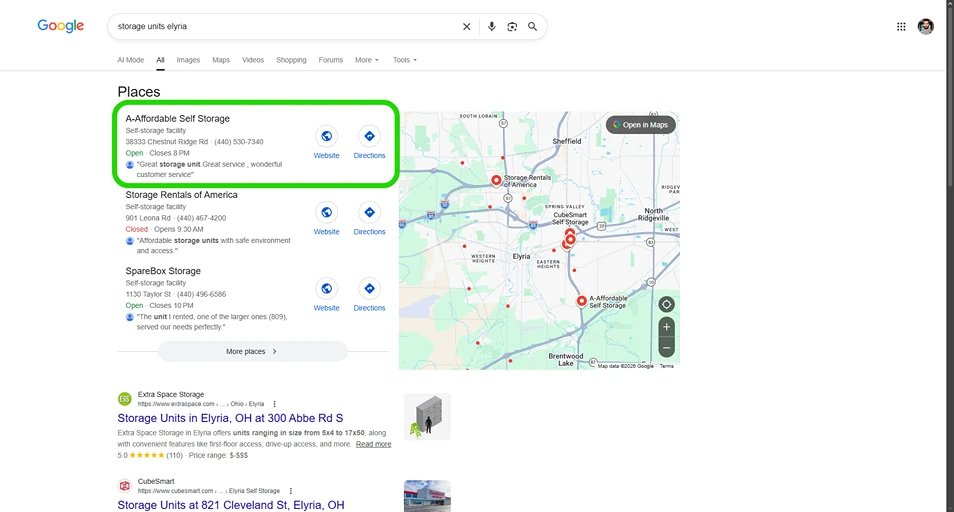
- “storage units elyria”: A-Affordable Self Storage is first in the map pack.
What This Doesn’t Prove
Each screenshot is one search from one place on one day. Local results change with the searcher’s location, and the map pack also depends on each facility’s own Google Business Profile, reviews and distance.
Source
Google search results captured in 2026. The searches and highlighted results are in the screenshots below.
Case Study 02
Content Websites: Steady Organic Traffic Growth
Informational content websites · largest keyword market: Pakistan · site names hidden
The Challenge
Content websites earn money from traffic, so they need more organic visitors every month and keywords that hold top positions against bigger sites.
What I Did
- Keyword research: found informational topics the sites could realistically rank for, grouped them into clusters and planned one page per search intent.
- Content: wrote and briefed articles that answer the question early, with clear headings, FAQs and supporting sections, and refreshed older posts that had started to slip.
- On-page SEO: rewrote titles and meta descriptions around the main keyword and cleaned up heading structure.
- Internal linking: linked related articles inside each cluster so new posts got found and ranked faster.
- Technical fixes: kept indexing, sitemaps, page speed and structured data in order.
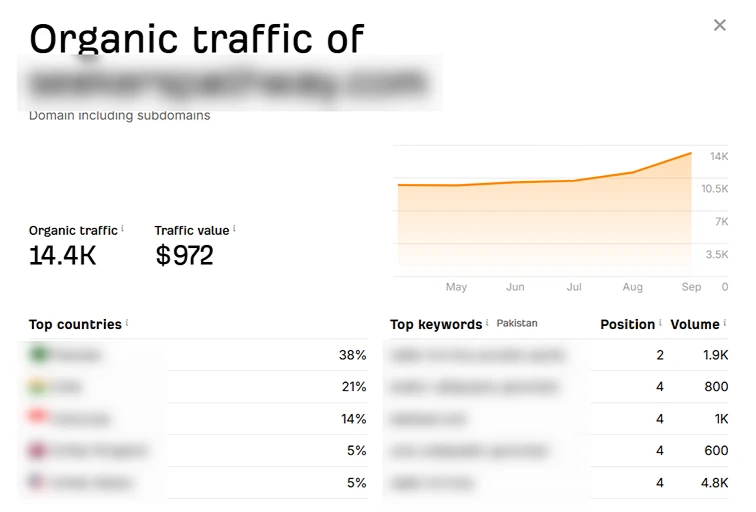
- Tracking: checked organic traffic, traffic value and top keyword positions in Ahrefs every month and put more work into the topics that grew.
The Results
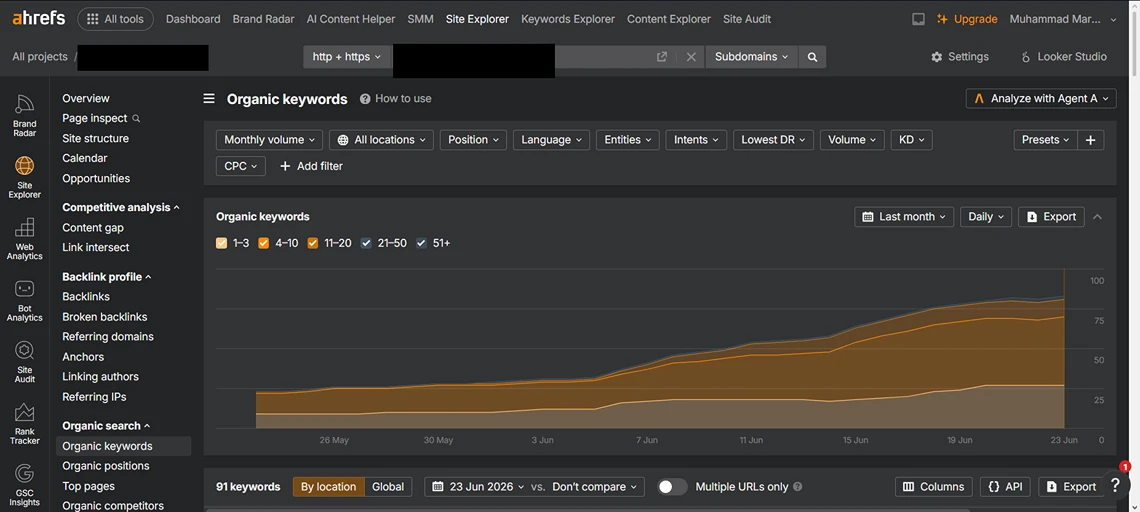
- Site A: 7.6K estimated monthly organic visits, up every month from June to October. Its top keywords sit in positions 1 to 4.
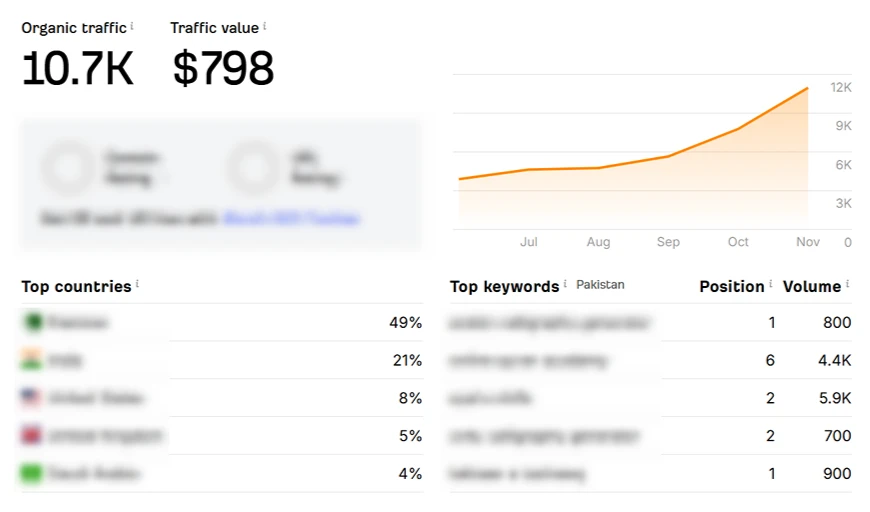
- Site B: 10.7K estimated monthly organic visits and a traffic value of $798, rising from July to November. Its top keywords sit in positions 1, 2 and 6.
- Site C: 14.4K estimated monthly organic visits and a traffic value of $972, with the steepest rise between August and September.
What This Doesn’t Prove
Ahrefs traffic and traffic value are modelled estimates, not real visits or revenue. The screenshots show months but not the year, and the site names are hidden.
Source
Ahrefs Site Explorer overviews.
Case Study 03
Search Console and Analytics: Growth at Scale
Client and own websites · Google Search Console and Google Analytics 4 data
The Challenge
Rankings only matter if they turn into clicks, visitors and actions. These sites needed more search clicks and more users who complete key events.
What I Did
- Search Console review: found pages and queries with plenty of impressions but few clicks, and pages stuck just below the top positions.
- On-page SEO: rewrote titles and meta descriptions to improve click-through, and expanded content to match what searchers were looking for.
- Content: published new pages for keyword gaps and updated existing pages instead of letting them go stale.
- Technical SEO: fixed indexing and crawl issues, cleaned up internal links and kept sitemaps accurate.
- Measurement: tracked clicks, impressions, CTR and position in Google Search Console and Rank Math Analytics, and users and key events in Google Analytics 4, rather than relying on third-party estimates.
The Results
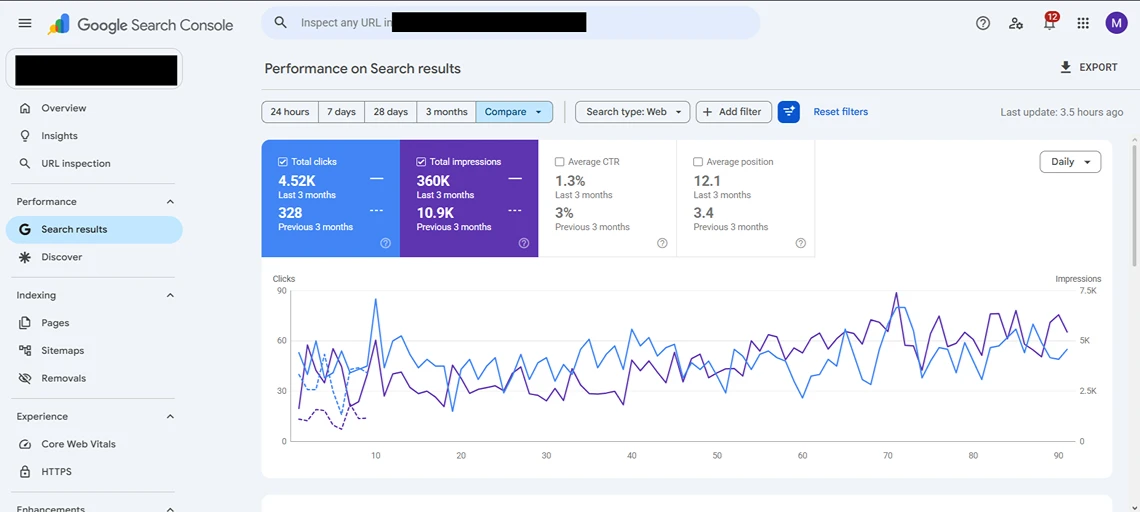
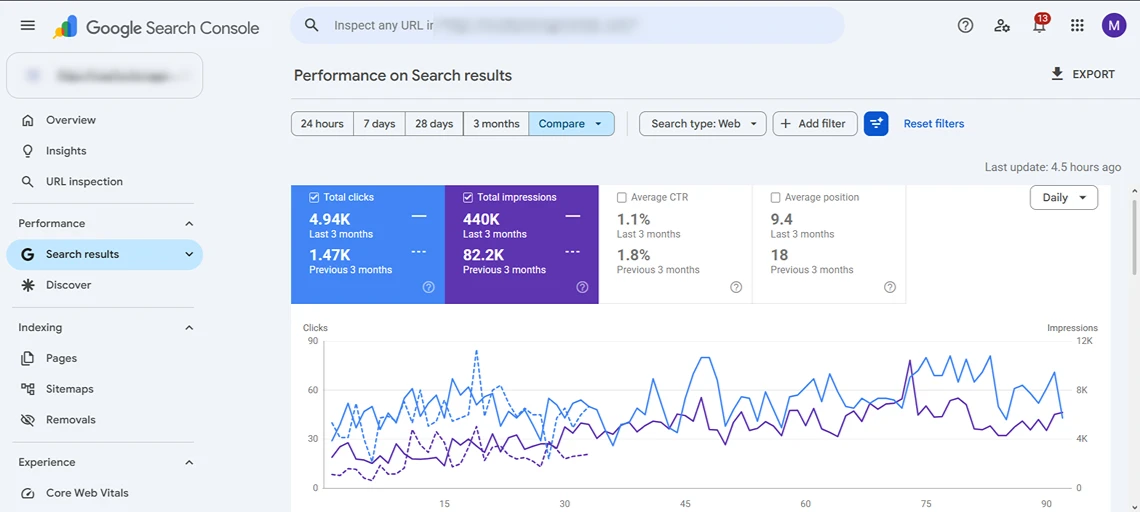
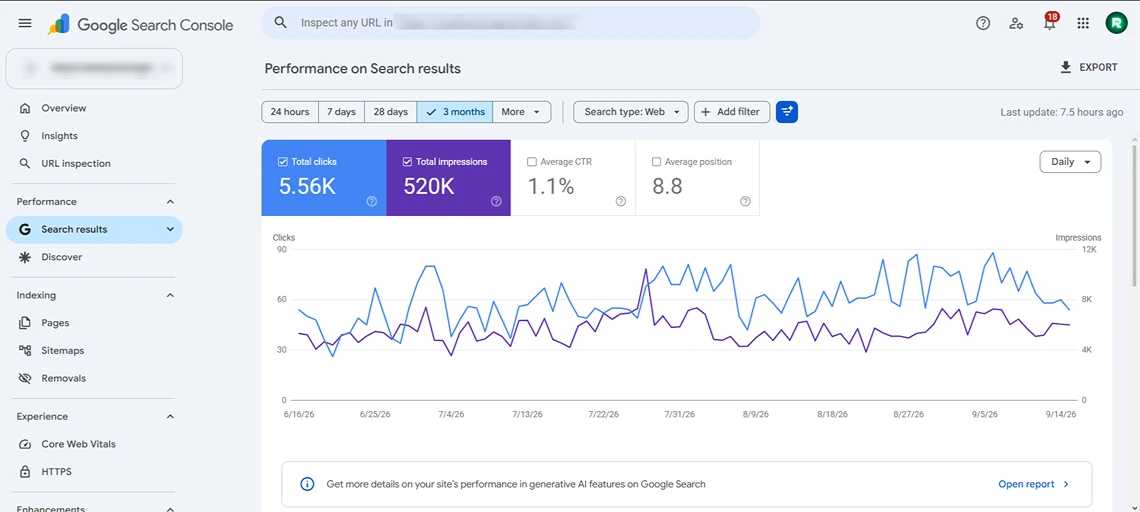
- Three months to February 2024: 42.4K clicks and 1.97M impressions, a 2.2% CTR and an average position of 6.2, with daily clicks at their highest at the end of the period.
- 8 September to 3 October 2025: 300.46K impressions (up 43.16K), 3.39K clicks (up 1.19K), a 1.13% CTR (up 0.27) and 16.87K ranking keywords.
- Last 12 months in Google Analytics 4: 48K active users (up 6,846.1% on the previous period), 47K new users, 205K events and 670 key events (up 88.2%).
What This Doesn’t Prove
These are different websites, so the numbers can’t be added together. Very large percentage increases come from a low starting point.
Source
Google Search Console, Rank Math Analytics and Google Analytics 4.
Case Study 04
AI Search Visibility and Technical Health
Client and own websites · Ahrefs Brand Radar, Ahrefs Site Audit and PageSpeed Insights
The Challenge
Search is moving into AI answers. A site now needs to be cited by Google AI Overviews, AI Mode, ChatGPT, Gemini, Perplexity and Copilot, and it needs a clean, fast technical base so crawlers can read it.
What I Did
- AEO: wrote short, direct answers at the top of key sections and added FAQ sections that AI tools and featured snippets can quote.
- GEO: made pages clear about who the business is and what it offers, so AI tools like Gemini, Perplexity, Copilot and ChatGPT can cite them.
- Structured data: added Organization, WebSite, Article and FAQ schema so search engines and AI systems can read the details.
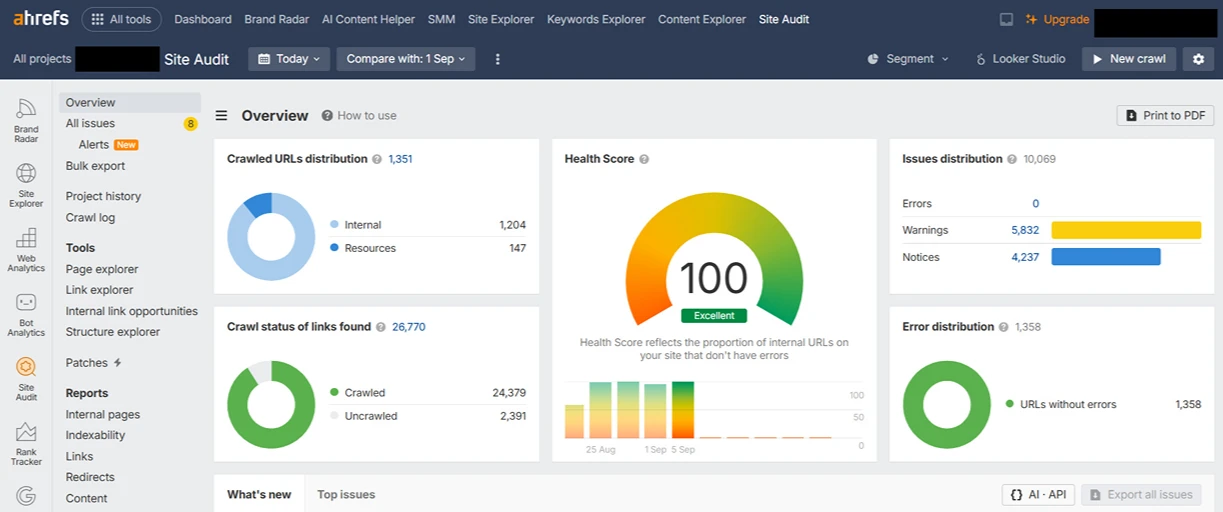
- Site audit: crawled the site in Ahrefs Site Audit and fixed the issues it found, such as broken links, redirect chains, missing tags and duplicate content.
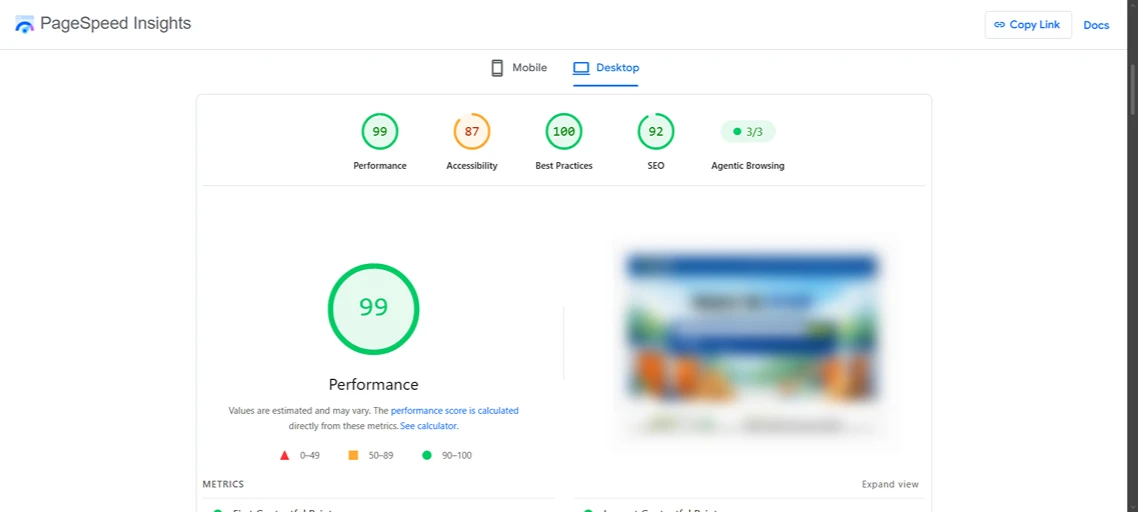
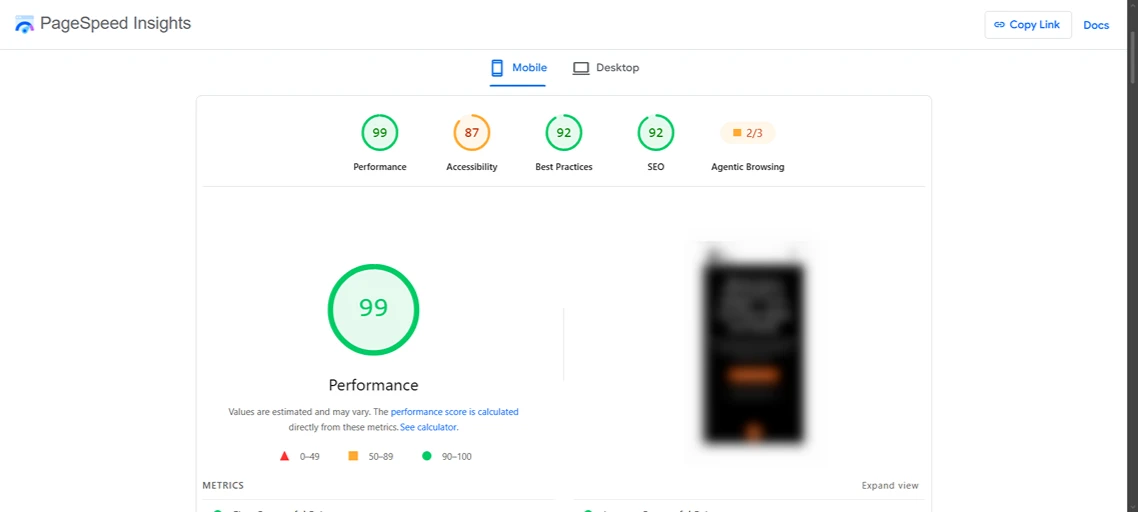
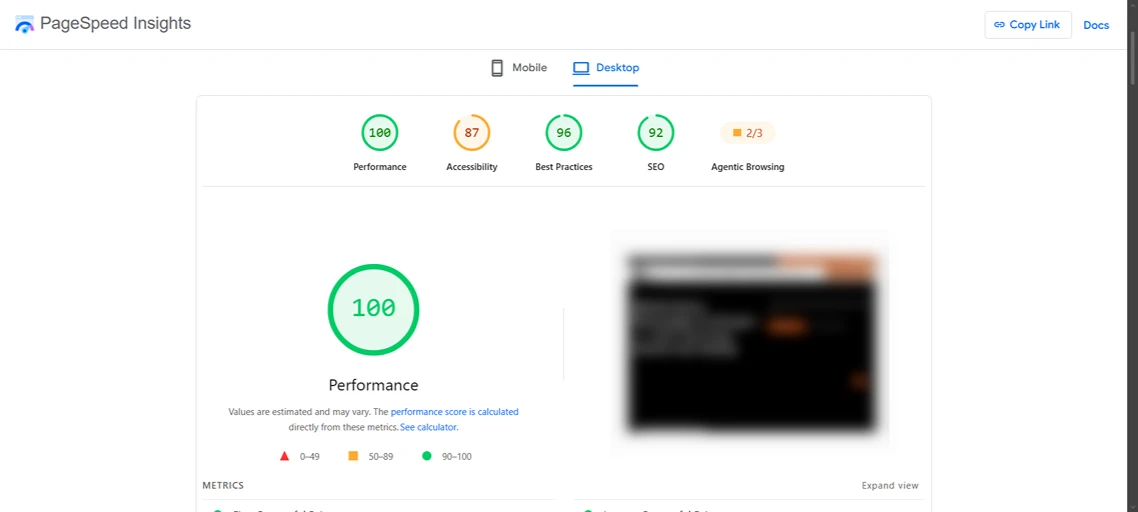
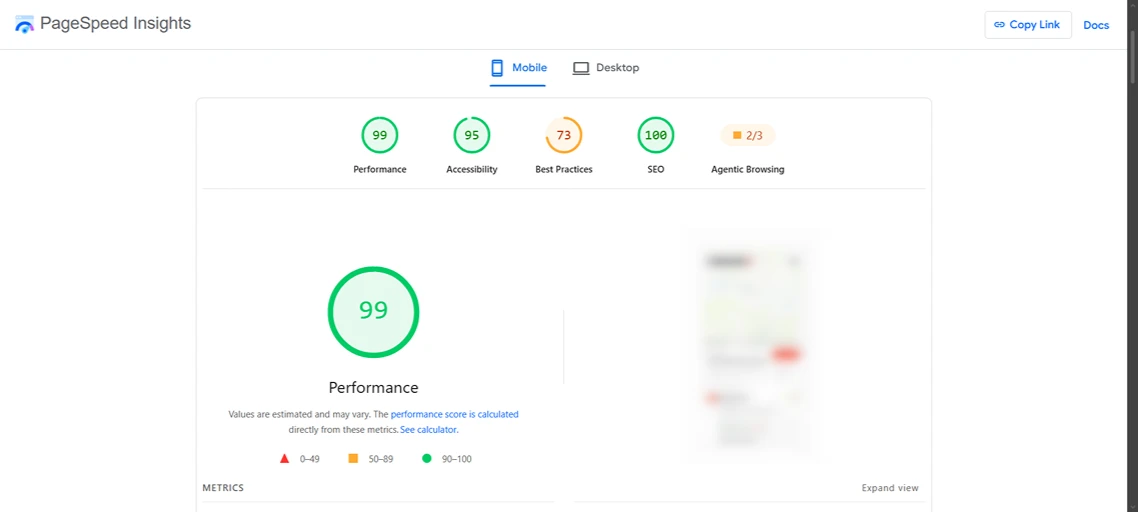
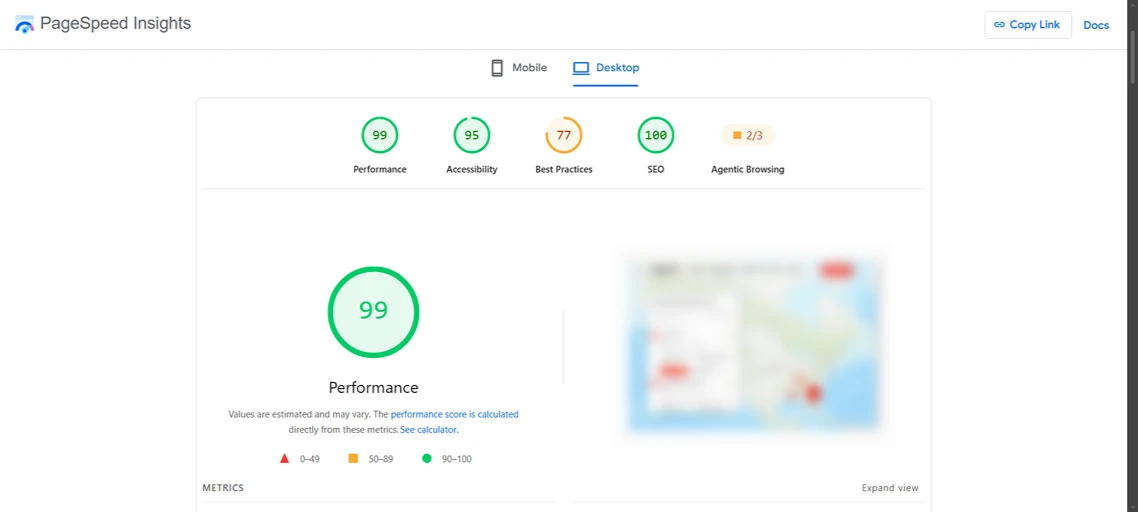
- Page speed: compressed and resized images, cut unused scripts and improved caching, then checked the result in PageSpeed Insights on desktop and mobile.
- Monitoring: tracked AI citations in Ahrefs Brand Radar to see which pages and platforms picked the site up.
The Results
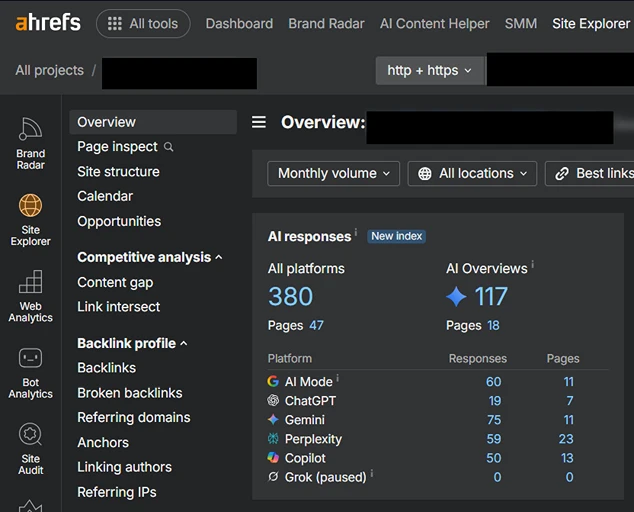
- AI citations: 380 AI responses citing the site across 47 pages, including 117 Google AI Overviews across 18 pages. By platform: Gemini 75, AI Mode 60, Perplexity 59, Copilot 50 and ChatGPT 19.
- Site Audit: a health score of 100 across 1,351 crawled URLs.
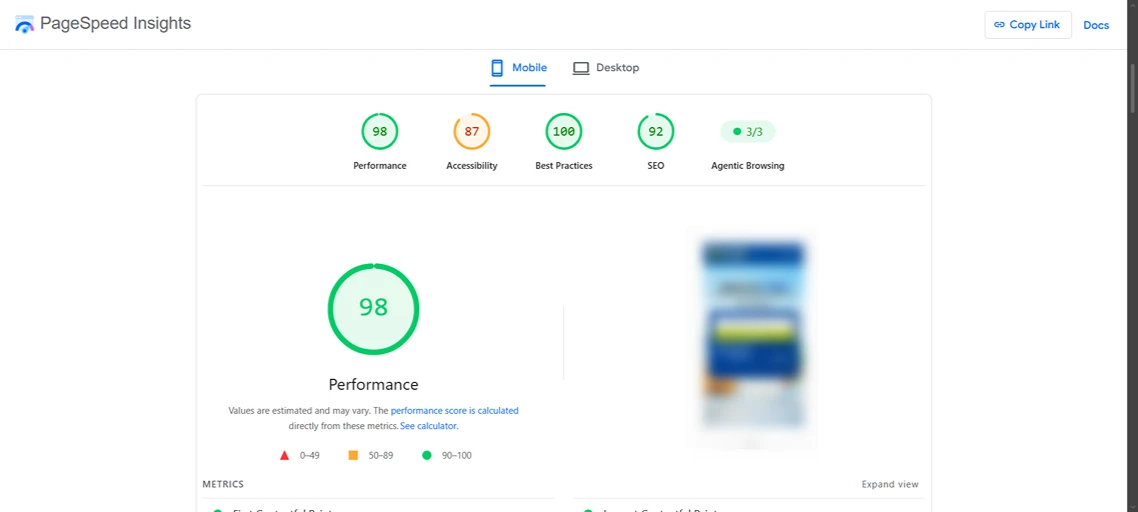
- PageSpeed Insights: a desktop performance score of 100 and a mobile score of 98.
What This Doesn’t Prove
The screenshots don’t all come from the same site. AI citation counts only cover the prompts Ahrefs tracks, and PageSpeed scores are lab tests, not real-user data.
Source
Ahrefs Brand Radar, Ahrefs Site Audit and Google PageSpeed Insights.
Case Study 05
My Own Site: riichimirza.com
Own project · SEO services site
The Challenge
I test every method on my own website before I sell it. This site needs to be built, published and kept in good technical shape by one person.
What I Did
- Built riichimirza.com on WordPress and Divi, with 32 pages and 252 blog posts, a service page for each SEO, AEO, GEO and development service, and structured data on every page.
The Results
- This site is live, so you can check the pages, speed and structured data yourself.
- Every service page on this site has its own SEO title, meta description, canonical URL and schema.
What This Doesn’t Prove
This case study shows how the site is built, not traffic or revenue. I only add numbers here when I can show the screenshot.
Source
The live site and its WordPress post and page counts on 14 November 2026.
How I Measure
What Every Case Study Shows
Results are only useful if they’re honest and comparable, so every case study follows the same rules.
Real Data Sources
Numbers come from Google Search Console, Google Analytics, Google search results or paid SEO tools such as Ahrefs. Tool estimates are labelled as estimates.
A Clear Time Frame
Every result shows the date range or search it covers, so you know what’s realistic.
The Full Picture
I explain the starting point and the work done, not just the best-looking chart.
Business Results
Where possible I show leads, calls or sales as well as rankings and traffic.
Client Privacy
Some clients prefer not to be named. In those cases I share the industry and market only.
No Guarantees Implied
Past results show what’s possible, not a promise. Every site, market and budget is different.
Context
What Results Depend On
Two websites doing the same SEO work can see very different results. Competition in your market, the age and history of your domain, how fast changes are made and how much content and authority you start with all play a part.
In most projects, technical fixes show up first. Content and authority take longer, and SEO results usually build over around 4 to 6 months. AI search visibility, through AEO and GEO, follows the same pattern: clear, trusted content gets cited more over time.
If you want to know what’s realistic for your site, the fastest way is a free SEO audit.
Results Usually Depend On
How Competitive Your Keywords and Market Are
Your Domain’s Age, History and Authority
Technical Health When We Start
How Quickly Changes Go Live
Content Quality and Depth
Consistent Work Over Several Months
Read Critically
How to Read Any SEO Case Study
Use these checks on my case studies and on anyone else’s. A good case study answers all of them.
Questions to Ask
What Exactly Was Measured?
Clicks, impressions, rankings and leads are different things. Clicks alone don’t prove sales.
What Was It Compared With?
Two periods side by side say more than one chart. Seasonal businesses can grow for reasons unrelated to SEO.
What Was Done, in What Order?
A short list of specific fixes is a method. A list of every SEO task ever invented isn’t.
Signs It’s Trustworthy
A Real Data Source
Screenshots from Search Console, Analytics or a rank tracker, not a designed graphic.
Stated Limits
Honest cases say what they can’t prove, such as several changes made at once.
A Problem Like Yours
A case is most useful when the starting problem matches what your site is facing now.

Want Results Like These for Your Site?
Send your website and goals. I’ll tell you honestly what’s possible.